
Follow us:
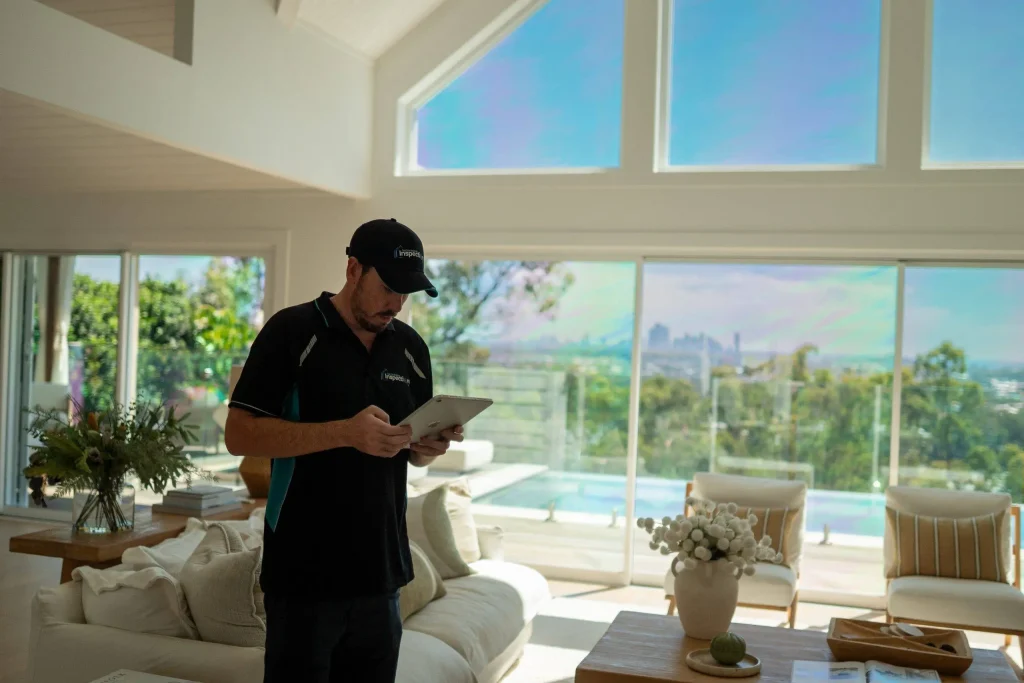
A brand-new home should, by all reasonable logic, be the safest thing you can buy. You’re not worrying about previous owners, years of deferred maintenance, or unknown history.
And yet some of the most significant issues I’ve come across in more than a decade of inspections have been in homes that were barely finished. This includes waterproofing that wouldn’t last a year, roof drainage that didn’t work, and slabs that weren’t level, issues that looked completely fine on a walk-through and would have become the buyer’s problem the moment they accepted the keys.
Many new property buyers can miss this, especially when the builder is telling them everything is done to standard. But the builder declaring practical completion and the home actually being finished to standard aren’t always the same thing. That gap is what a new build handover inspection (also called PCI or Practical Completion Inspections) is there to catch.
This 2026 guide covers everything that a new build handover involves, including why these inspections are critical, the most common Gold Coast defects, the costs, how the process works, and what to do if the builder pushes back.
Think of this as your roadmap for moving into your new home with confidence.
A handover inspection or practical completion inspection is an independent, third-party review of your newly built home once the builder declares it “practically complete.” In simple terms, this inspection ensures the home actually meets:
The goal is to ensure the house is finished to the standards you paid for before you accept the keys.
New builds across Queensland have increased significantly since 2020, and that high volume comes with more rushed timelines and more mistakes.
The QBCC’s own 2023–24 Annual Report recorded 5,886 building dispute cases finalised that year, a 34.6% increase from a decade earlier, and that only counts the disputes that were formally lodged. The ones caught at handover and quietly resolved never make it into that count at all.
A PCI Gold Coast handover inspection can provide a safety net at the exact moment when changes are still the builder’s responsibility.
Anyone building or purchasing a new home should arrange a new build handover inspection, but it’s especially important for:
Across more than a decade of experience with Queensland homes, I’ve learned that the most frustrating PCI issues aren’t always structural. They’re usually workmanship shortcuts that builders downplay as “cosmetic”, but many still fall below acceptable QBCC standards.
Waterproofing failures are consistently the most expensive defect found in new build handover inspections, and the QBCC has flagged them as one of the most frequently reported issues across Queensland.
Before any tiles go down in a bathroom or laundry, a membrane is applied to the floor and walls to stop water from getting into the structure underneath. When that membrane isn’t applied correctly, such as when the floor isn’t graded toward the drain, the coverage is patchy, or small gaps are left in the surface, water eventually finds its way through.
By the time a leak shows up, the fix means pulling up all the tiles, reapplying the membrane, and starting again from scratch.
In 2024 – 2025, each claim finalised under the Queensland Home Warranty Scheme averaged almost $25,000 in rectification costs. Catching the issue at handover means the builder covers this cost but otherwise, you will be paying the full costs yourself.
Patchy paint, visible plaster joins, screw pops pushing through walls, and overspray on surfaces that should be clean all come up regularly in new build reports. Builders tend to label these cosmetic and move on, but the QBCC’s Standards & Tolerances Guide makes it clear that many of these items aren’t acceptable.
These issues often come from the small oversights that accumulate when trades are moving quickly between jobs. This can include power points that haven’t been wired, tapware installed off-centre, hot water systems at the wrong height, and data ports missing from rooms where they were specified in the contract.
All of it is the builder’s responsibility to fix before handover, but without a proper inspection, most of it goes unnoticed until after you’ve moved in.
Coastal conditions and rushed roofing fit-offs often lead to damaged gutters, incorrect screw placement, and inadequate drainage. In new Gold Coast builds, poor roof drainage is one of the more common ways water finds its way into a brand-new home.
The QBCC has also noted that drainage failures can cause long-term structural damage and health risks when they aren’t caught early.
When the builder notifies you that the home is “practically complete,’ it means that construction is finished except for minor defects. At this stage, you are legally entitled to bring an independent inspector.
Your builder can’t refuse this or direct you toward someone they’ve chosen. The choice of inspector is entirely yours.
The inspector conducts a detailed review of every accessible area of the home. This includes:
Most inspections take a couple of hours, depending on the size and complexity of the home, but a thorough one covers a lot more ground than a standard walk-through with the builder. This is where the difference between a rushed walkthrough and a proper handover inspection on the Gold Coast becomes obvious.
Your inspector will give you a detailed report with photos and clear notes pointing out the specific defects, along with references to the QBCC Standards & Tolerances Guide 2024.
Builders are required to address these items before you accept handover, and having everything documented in writing protects you if there’s a dispute further down the track.
Once the builder confirms the repairs are done, the inspector usually returns to verify that the work has actually been completed to standard.
They check to make sure everything has actually been fixed. It’s a simple step, but it cuts down the chance of future disputes and helps ensure you’re not taking ownership of problems that were missed the first time.
Handover inspection costs on the Gold Coast vary, but most reputable companies tend to fall within a similar range.
These figures are general industry estimates, and the actual cost will depend on the inspector you work with, the size and layout of your home, and how many defects were found in the initial inspection.
Bigger and more complex homes, such as those with high ceilings, multiple levels, or custom cabinetry, require more time and attention than a straightforward single-storey build. Properties with elaborate waterproofing systems across multiple wet areas also need a more thorough review than a home with a standard bathroom layout. These are all reflected in the fee.
The number of defects found in the initial inspection can also affect the overall cost. If the builder has a long list of items to address, the follow-up inspection takes longer to complete, and in some cases, a second follow-up may be needed if repairs aren’t done to standard the first time around.
While not common, it does happen, particularly on high-volume builds where trades are moving quickly between jobs.
A lower price usually means less time onsite, and less time onsite means things get missed. Some cheaper inspectors rely on generic reporting templates that aren’t referenced against the QBCC Standards and Tolerances Guide or the NCC, which makes it harder to hold a builder accountable for defects that fall outside those standards.
Experience also matters. An inspector with 5 – 10 years of experience in the industry is going to identify issues that someone without hands-on trade experience simply won’t pick up.
When you’re about to make the final payment on a new build, the difference in price between a thorough inspection and a cheap one is minor compared to what a missed defect can cost you down the track.
Most handovers go smoothly, but knowing where you stand before you get to that stage makes a real difference if things don’t.
Queensland buyers are protected by statutory warranties under the Queensland Building and Construction Commission Act 1991. As a buyer, you have the right to:
Most contracts also include a defects liability period of six to twelve months after handover, during which your builder is obligated to rectify any defects that become apparent. However, it can be a much slower and more frustrating process than catching defects before settlement.
Some builders will say certain defects are “within tolerance” or “just cosmetic.” In some cases, those assessments are legitimate, but they’re also the default response when a builder wants to avoid additional rectification work before final payment.
The QBCC Standards and Tolerances Guide sets out exactly what is and isn’t acceptable. Once you understand the standards yourself and have a proper report to point to, it becomes a lot harder for anyone to argue their way around the issues.
The other common tactic is that they’ll handle those defects post-settlement. The problem is that once you’ve accepted the keys and made the final payment, ownership responsibilities shift to you as the homeowner.
If the builder pushes back, the best approach is to point them straight to the written report and the relevant clauses in the QBCC guide, then ask for the repairs to be done within a clear timeframe.
Keep all communication in writing, such as in emails and messages, to create a paper trail that can help solidify your case.
If the builder continues to dispute legitimate defects, the QBCC offers an Early Dispute Resolution process that you must go through first before the matter can be escalated to the Queensland Civil and Administrative Tribunal.
The inspection is only as good as the person carrying it out. On the Gold Coast, where new estates are going up quickly, and builds are often handed over under time pressure, who you choose matters just as much as whether you book one at all.
At a minimum, the inspector you hire should have:
At Top Tier, these are the very standards I hold myself to. I hold a QBCC Completed Residential Building Inspection Licence, an active Builder’s Licence, an active Pest Licence, and carry full insurance, backed by over a decade of experience in construction and building certification.
Before founding Top Tier Building Inspections, I rose to a management role overseeing all Queensland inspectors at one of Australia’s largest building inspection companies.
That background is exactly why I’d encourage you to ask any inspector — including us — to see a sample report before you book. It gives you a clear picture of how thorough and detailed their work actually is, and a good inspector will have no hesitation providing one.
Before committing to an inspector, it’s worth asking a few direct questions to get a sense of how they operate:
Stay clear of inspectors who:
Reports without photos are difficult to use if a builder disputes a defect, and a rushed inspection on a new build almost always means items have been missed.
A proper handover inspection is what gives you the confidence that the home has been finished to the standard you paid for and the leverage to make sure anything that hasn’t been is dealt with before the final payment leaves your hands.
If you’re approaching handover and want an independent set of experienced eyes on your new build, Top Tier Building Inspections is here to help. Book an inspection or request a sample report before you sign anything.