
Follow us:
Every property I inspect has cracks in the walls somewhere. Most cracks are cosmetic. A few are structural cracks, and telling them apart is the difference between a $50 tube of filler and a five-figure repair bill.
You might be standing in your own hallway looking at a wall crack that wasn’t there last month. You might be walking through a house you’re about to buy and wondering what the hairline cracks above the door reveal actually mean. Either way, you’re trying to work out whether the crack matters or whether you can safely ignore it.
I’ve inspected thousands of properties across the Gold Coast in the past decade. Most cracks are usually harmless. But the ones that affect structural integrity point to foundation movement, moisture damage, or termite activity behind the plaster, and they can be expensive to fix when they’re missed. Individual cracks rarely tell the whole story either. Patterns do, so it pays to look at each crack alongside every other crack on the property.
In this guide, I’ll show you the four main types of cracks and what direction tells you about the cause, how to judge severity with a ruler, the common causes in Australian homes, and when to bring in a licensed inspector for a proper assessment.
Direction is the first thing I check when a wall crack appears. It narrows the field faster than anything else, because different causes produce different-shaped cracks. Vertical, horizontal, diagonal, and stepped cracks each have a distinct set of likely explanations.
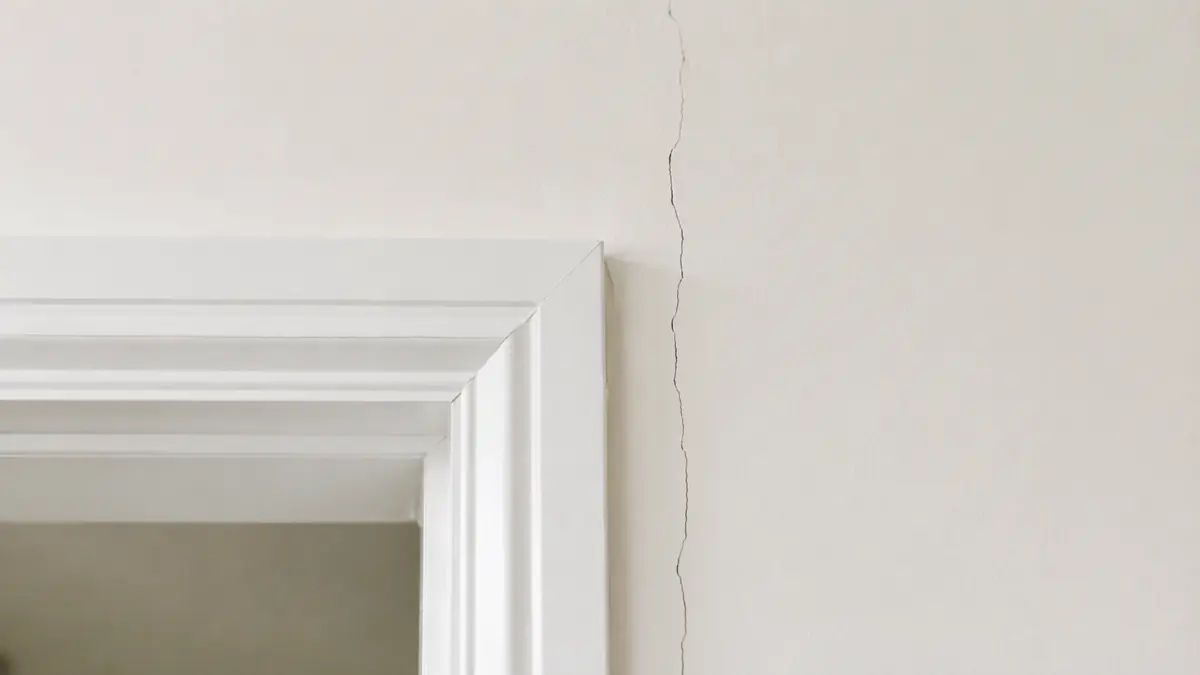
A vertical crack in a wall is usually the least worrying of the four types of cracks. Most vertical cracks in newer or freshly plastered rooms are shrinkage, and small hairline cracks near corners often result from normal settling as building materials adjust.
Vertical cracks become more serious when they run the full height of a wall in an older home, widen at the top or bottom, or appear on a load-bearing wall and keep growing. Any of those signs points at foundation movement rather than shrinkage, and the underlying structural issue needs a proper inspection.
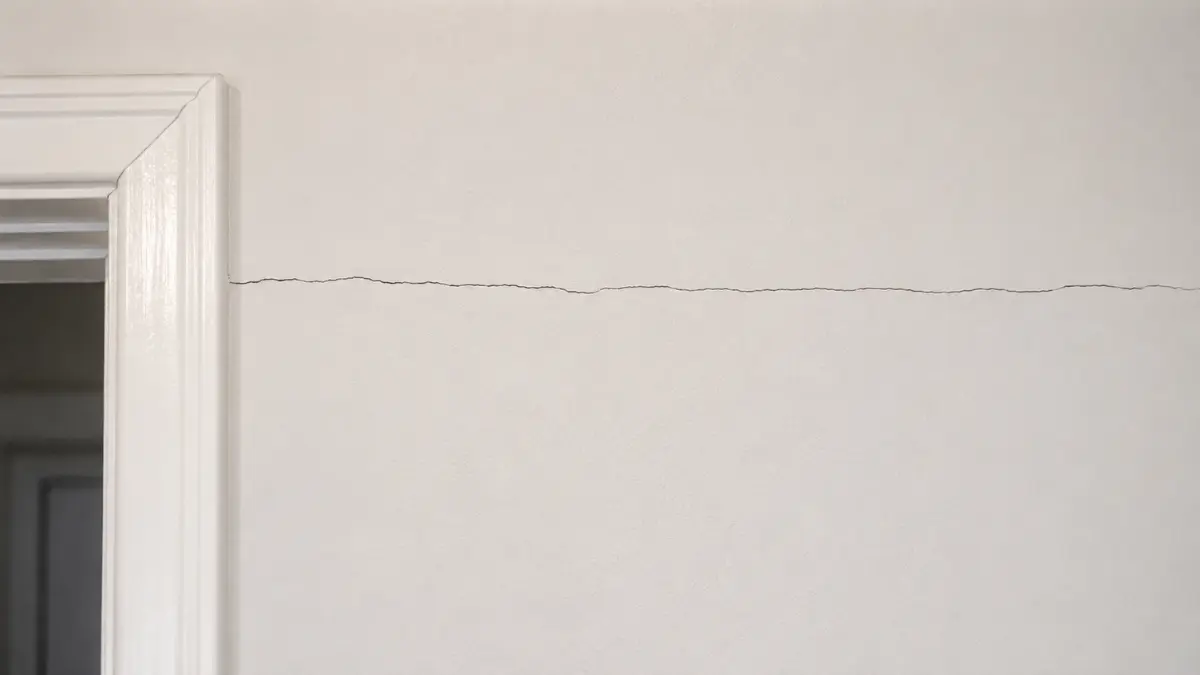
Two things can produce a horizontal crack in a wall, and telling them apart is where a lot of homeowner panic starts.
The mild version is a horizontal hairline crack in a wall of interior plasterboard or render. These hairline cracks show up when plaster shrinks unevenly or where a wall meets a ceiling at right angles. Horizontal cracks in interior plaster are usually harmless.
The serious version is a horizontal crack in a masonry or brick wall, especially one that runs along the mortar joint. That kind of crack points at soil pressure on the outside of the wall or a load-bearing failure above. Horizontal cracks in masonry walls rarely close on their own. They tend to widen as the pressure keeps building, and repair of a horizontal crack in a retaining wall or below-ground brickwork needs a professional evaluation before any repair work starts.
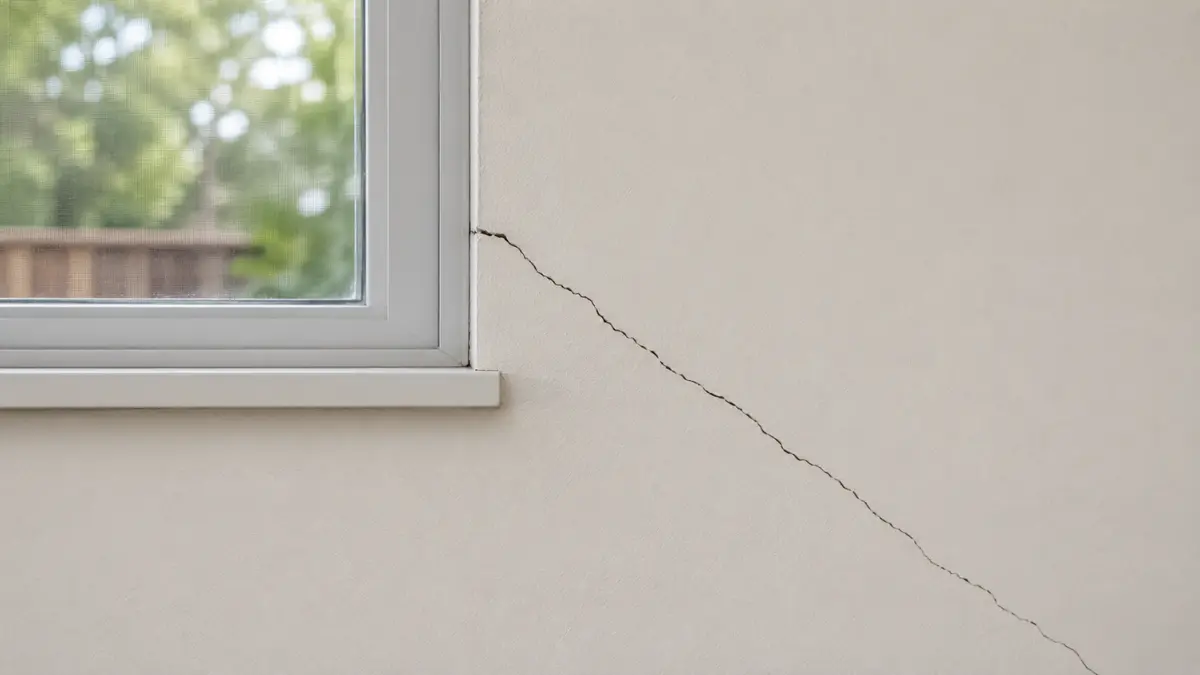
Diagonal cracks tend to start at the corners of doors and windows and run outward at 30 to 45 degrees. They’re the classic signature of differential foundation movement, meaning one part of the slab is moving at a different rate to another. The wall gives at its weakest points, which are the corners of the openings cut into it.
A single diagonal crack over an old doorway can be nothing. But when a diagonal opens up alongside doors and windows that suddenly stick, uneven floors, or matching cracks on other walls, that combination can indicate structural movement below the property. Diagonal cracks like these need a professional assessment, and often a structural engineer’s follow-up.
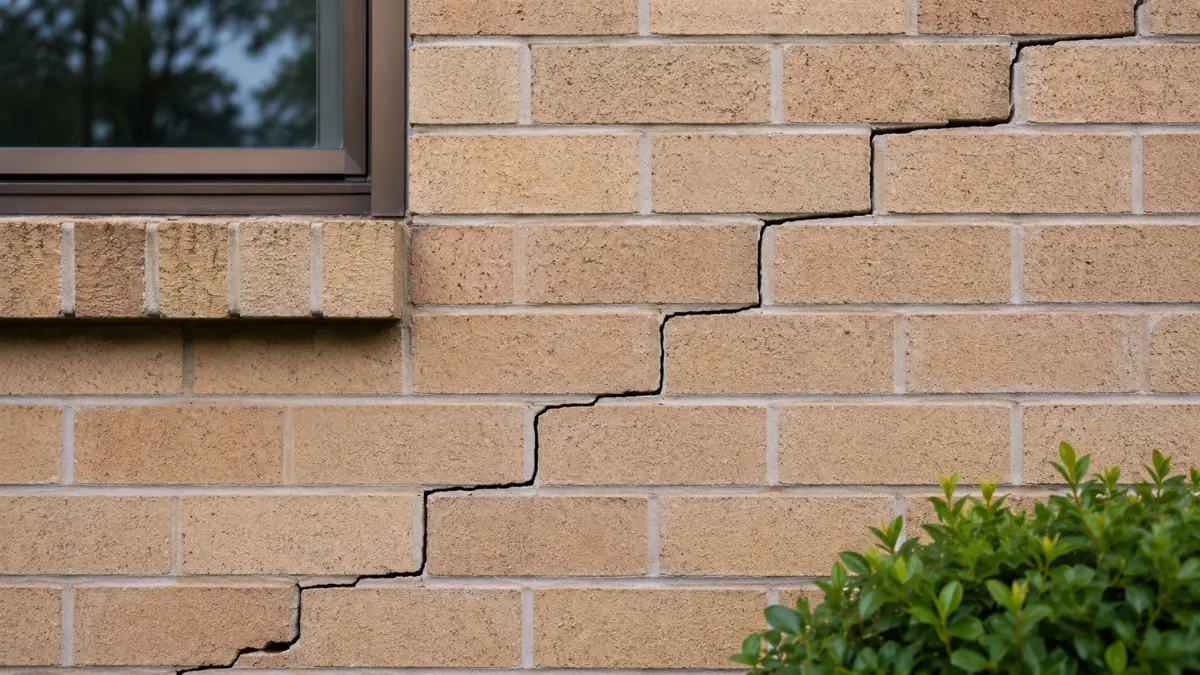
Stepped cracks (also called stair-step cracks) follow the mortar joints between bricks in a jagged upward pattern. In a masonry wall, these are almost always structural cracks caused by ground movement. When the ground beneath the slab shifts, the crack takes the path of least resistance and steps up through the mortar rather than splitting the bricks themselves.
If a stepped crack shows up on the outside of a house, and especially if it’s more than a couple of millimetres wide or lines up with cracks visible from inside, the property needs a proper inspection to work out the root cause and the extent.
Width is the single most useful measurement a homeowner can take. It doesn’t tell you the cause, but it tells you the severity, and it gives you a repeatable number you can monitor over time.
Grab a ruler or a set of digital callipers. Measure the crack at its widest point. Write the number down with the date. Mark the ends of the crack with a fine pencil line so you can tell if the crack is widening month to month.
Here’s how the width categories break down:
| Category | Width | What it usually means | Action |
| Negligible | Under 1 mm | Cosmetic causes like plaster shrinkage, thermal movement, or paint cracking | Filler and paint |
| Fine | 1–5 mm | Cracks are usually cosmetic, occasionally structural | Monitor for six months, log any widening |
| Medium | 5–15 mm | Structural attention likely needed | Book a licensed inspection |
| Wide | 15–25 mm | Significant structural movement | Inspection plus structural engineer’s assessment |
| Very Wide | Over 25 mm | Serious structural problem, requires immediate attention | Arrange an inspection immediately |
Movement matters as much as measurement. A 3 mm crack that’s been 3 mm for ten years is not the same as a 3 mm crack that appeared last month. If a fine crack has appeared in the past few months or has visibly widened since you first noticed it, the underlying structural problem is still active.
Once you’ve categorised a wall crack by direction and measured its width, the next question is what’s causing it. In Australian homes, most causes are ground-related, and the Gold Coast has more than its share.
The most common structural cause I see in Queensland homes is reactive clay soil. This kind of soil swells with moisture and contracts as it dries, pushing the slab up in wet months and letting it drop in dry ones. Homes built on Class M, H, or E sites move enough with the seasons that the walls above show the effects. Soil conditions like these are widespread across the Gold Coast, especially in the western and hinterland suburbs.
CSIRO’s Foundation Maintenance and Footing Performance homeowner’s guide sets out the site classification framework Australian engineers use. Homes on reactive-clay blocks are also governed by AS 2870, the Australian Standard for residential slabs and footings. A pre-purchase building inspection picks up the pattern of reactive-soil damage before you commit to a property.
I inspected a house in Ashmore last year where the client thought termites had cracked the plaster around a window. When I walked the yard, a mango tree four metres from the slab was drawing moisture out of the clay unevenly on one side. Reactive-soil movement, made worse by the tree, was the actual cause of the diagonal cracks.
Poor drainage is the second most common cause of cracks appearing on Gold Coast properties. Water pooling around the footings, blocked weep holes in a brick wall, or a yard graded to send runoff back toward the house puts moisture where it shouldn’t be. Over time, that moisture saturates one section of ground more than another, and the ground movement cracks the walls above.
Vegetation is often the invisible half of the problem. Trees within a few metres of a slab pull moisture out of the soil in one direction. When one side of the house dries faster than the other, the differential movement translates into diagonal or stepped cracks. Removing an established tree can also cause the ground to rebound and crack the slab in the opposite direction.
The third common cause is completely benign. Buildings expand and contract with temperature changes. Wooden framing swells with humidity and dries in winter. Fresh plaster shrinks in the first year or two after installation, and that shrinkage produces fine hairline cracks in plaster walls. These usually appear above door frames, in ceiling corners, and along the joints between wall sheets. Cracks that form from temperature changes and normal settling of building materials are superficial. The cracks result from normal settling, and the fix is filler and paint.
This is the question that sends people to Google in a panic, and getting the answer wrong in either direction is expensive. Assume subsidence when the real cause is termites and you’ll spend money to underpin a house that’s still structurally compromised. Assume termites when the real cause is subsidence and you’ll waste money on treatment for a problem that isn’t there.
Subsidence cracks have a specific signature. They start at the corners of doors and windows and run diagonally. In brickwork, they show up as stepped cracks following the mortar. They come with sticking doors, windows that don’t sit square in their frames, and floors that feel uneven. Cracks matched across multiple walls in the same house indicate structural movement in the slab.
Termite-driven cracks look different. They appear near skirting boards, around door reveals, and along ceiling cornices, which are timber junctions rather than masonry corners. They often come with moisture staining or blistered paint. The wall behind can sound hollow when tapped even though the paint line looks intact from a distance.
I inspected a place in Robina where the buyer had already booked an underpinning quote before I arrived. A big diagonal crack ran from a bedroom window down to the skirting board. When I ran the thermal camera up the wall, a warm patch showed up behind the paint. There was an active termite gallery inside the wall stud, and the crack came from the timber losing structural integrity as the colony chewed through it. The $8,000 quote to underpin the house would have fixed nothing, because the structural issue was inside the wall cavity above ground level. A combined building and pest inspection is the only way to tell these two causes apart with confidence.
Most of what you’ve read is a framework a homeowner can use to assess a wall crack on their own. There’s a point where the read runs out and a licensed inspector needs to take over.
Book an inspection when any of these apply:
Structural cracks require a licensed inspector working under AS 4349.1, the Australian Standard for pre-purchase property inspections, which requires the inspector to identify and report on major structural defects. For Gold Coast buyers, a proper pre-purchase building and pest inspection turns a wall crack from a source of anxiety into documented evidence you can use to negotiate the price, ask for repairs, or exit the contract inside the clause window.
Not every crack in your wall is a structural emergency, and most cracks are minor or cosmetic. The ones that matter cost thousands to repair if they’re left to run, and what you’ve read here is the same framework a licensed inspector uses to tell the two apart. Measure the crack, monitor it over the following months, and read the pattern across the whole property.
You might be preparing to buy a Gold Coast property, or you might have noticed cracks that don’t sit right in your current home. Either way, Top Tier Building Inspections can give you an independent, documented assessment of what those cracks are actually telling you. Book your inspection or request a sample report before you sign anything.
Cracks under 1 mm are cosmetic and can be filled with plaster filler. Cracks between 1 mm and 5 mm are worth monitoring over six months. Anything wider than 5 mm should be looked at by a licensed inspector, and larger cracks over 15 mm can indicate more serious problems that require immediate attention.
Most hairline cracks are minor cosmetic issues. Direction and location matter more than width at the hairline scale. A hairline in interior plaster above a door is almost certainly harmless. A hairline in a brick wall, or one that lines up with cracks on other walls in the same property, can indicate significant structural movement even at a very fine width.
Yes. Termite damage to timber framing behind plasterboard can cause the plaster to crack at wall junctions, near skirting boards, and along ceiling cornices. Moisture staining or blistered paint near the crack often separates termite damage from ordinary foundation-related movement.