
Follow us:
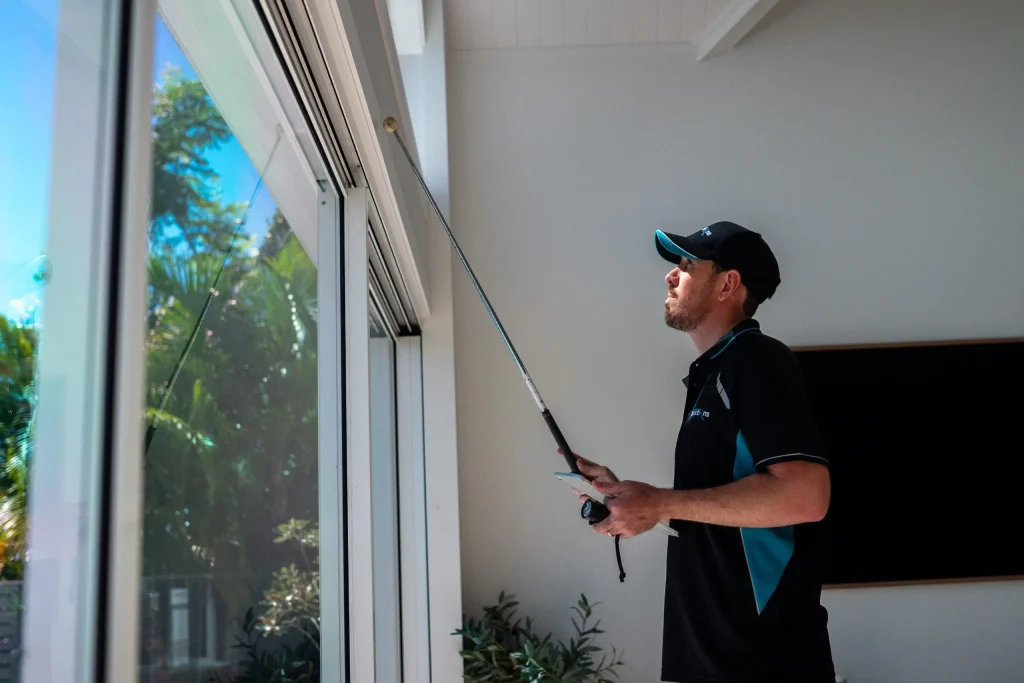
If you’ve started looking into pre-purchase inspections, you’ve probably come across two service types that seem to cover the same thing: a building-only inspection and a building and pest inspection.
The names are similar enough that it’s easy to assume one is just a slightly longer version of the other. But they differ in scope, tools, the Australian Standards they follow, and the qualifications the inspector needs to hold. And depending on the property you’re buying, choosing one over the other can leave a significant gap in what your report tells you.
So, what is a building and pest inspection, what does a building-only inspection cover, and how do you work out which one is right for your property?
A building-only inspection assesses the structure and condition of the property. Inspectors work through the building from roof to subfloor, checking the elements that determine whether it’s structurally sound and safe to live in.
This includes assessing the walls, ceilings, floors, framing, foundations, roofing, gutters, downpipes, drainage, balconies, stairs, handrails, and external structures like retaining walls and fencing.
The inspectors won’t cut into walls or pull up flooring, but they will check every area they can safely access.
The most common signs of structural issues or major defects they’ll be looking for include:
This service is governed by AS 4349.1, which sets out the scope and methodology inspectors must follow.
At Top Tier Building Inspections, I include a same-day report with photos, risk ratings, and a follow-up consultation call to walk you through these findings.
A moisture meter is one of the inspector’s primary tools for this service. It picks up elevated moisture levels in walls, floors, and ceilings, which can indicate leaks, rising damp, failed waterproofing, or condensation.
The inspector will also use a torch and ladder to access roof cavities and subfloor areas where issues tend to hide.
Beyond the tools, inspectors rely on their construction knowledge to assess how the building was constructed, how it’s holding up, and what’s likely to cost you money down the track.
A building and pest inspection covers two assessments in a single appointment: a full building condition assessment and a timber pest assessment.
The building side follows the same scope as a building-only inspection, covering structural integrity, moisture, drainage, roofing, safety hazards, and general condition from the roof to the subfloor.
The pest component is a timber pest assessment. It’s specifically designed to identify termite activity, termite damage, wood borers, and wood decay fungi. It also looks for conditions that make the property more susceptible to future attack.
The inspector examines all accessible timbers in and around the property, including subfloor framing, roof timbers, skirting boards, door frames, window reveals, fencing, garden timbers, and any trees or stumps within the inspection boundary.
Aside from live termites, pest inspectors will also look for evidence of past activity, signs of previous treatment, and environmental conditions (such as excessive moisture or timber-to-ground contact) that raise the risk of future infestation.
The pest side of the inspection brings in tools you won’t see in a building-only assessment. Pest infestations or risks aren’t immediately obvious to the naked eye, so inspectors use specific tools to help them identify the signs. This can include:
Building and pest inspections aren’t completely independent. Moisture is the thread that connects them.
During a building inspection, the inspector might pick up high moisture readings in a subfloor or behind a bathroom wall. From a building perspective, that may be a waterproofing or drainage issue. But from a pest perspective, that same moisture creates exactly the environment termites need to thrive.
It works the other way, too. During the pest assessment, the inspector might find termite damage in load-bearing timber. That’s a pest finding, but weakened floor joists or hollowed-out roof timbers affect the structural performance of the home, which then becomes a building defect.
This is why a combined building and pest inspection gives you a more complete picture than booking either one alone.
At Top Tier Building Inspections, I offer a combined pre-purchase building and pest inspection.
I structure the combined inspection so that findings from one assessment directly inform the other. If moisture shows up in the subfloor during the building assessment, that area gets closer attention during the pest assessment. If termite damage appears in a structural member, I factor it into the building report.
CSIRO data places the Gold Coast in a high termite activity zone. The subtropical climate here creates year-round conditions that favour both moisture damage and pest activity.
Homes in suburbs like Nerang, Coomera, Helensvale, and Mudgeeraba sit on blocks surrounded by vegetation, with soil conditions and humidity levels that termites thrive in.
Coastal suburbs deal with salt air corrosion and moisture ingress that can mask or worsen pest damage. And older units in Southport and Surfers Paradise often have ventilation issues that push moisture levels up in exactly the areas termites target.
For Gold Coast buyers, the building and pest inspection combination addresses both the structural risks and the pest risks that are specific to this region. One without the other leaves part of the picture incomplete.
For most residential properties on the Gold Coast, a combined building and pest inspection is the right call. But there are situations where a building-only inspection can be appropriate.
A building-only inspection can be the right call when the pest risk is low or already accounted for. This includes situations such as:
For most Gold Coast properties, the combined building and pest inspection is the safer choice. They’re especially vital for:
Because the building and pest components require different skill sets, checking your inspector’s qualifications is worth a few minutes before you book. Here’s what to look for:
In Queensland, a building inspector must hold a Completed Residential Building Inspection licence issued by the QBCC. To get that licence, they need to have been a registered builder for a number of years or hold a building surveyor qualification.
You can verify any inspector’s licence for free on the QBCC’s online licence search tool. Just search by their name, business name, or licence number.
If it’s missing or they’re reluctant to provide it, that’s a red flag.
If you’re booking the combined service, the pest component requires a separate credential.
In Queensland, a timber pest inspector needs a Pest Management Technician licence issued by Queensland Health, with a specific timber pest endorsement. They also need a QBCC licence for termite management work.
A building inspector who doesn’t hold these additional qualifications can’t legally perform the pest component of a combined building and pest inspection.
Professional indemnity (PI) insurance protects you if the inspector misses something significant and you suffer a financial loss as a result.
In Queensland, the QBCC allows inspectors to operate without PI insurance, as long as they inform their clients. But that disclosure doesn’t always happen. Ask for a certificate of currency before you book, and confirm the inspector also carries public liability insurance.
Always ask what’s included in the quote. Here are some questions you can ask:
These details make a real difference when you’re using the report to negotiate or decide whether to buy a property.
Understanding the difference between a building only inspection and a building and pest inspection helps you make a more informed choice about what to book.
They assess different risks, use different tools, follow different standards, and require different qualifications. But their findings are closely connected, and for most Gold Coast properties, you’ll get the most value from a combined assessment.Book your inspection or request a quote from Top Tier Building Inspections today.